
Because many people have little exposure to woodworking and the manual trades, the process of creating finished furniture from a stack of rough lumber often seems mysterious.
For many custom projects, more than half the work is done not inside the shop, but on the computer (or with pencil and paper for some people). Up front planning minimizes time spent on the shop floor and reduces the chance for error. Before any wood is cut, every part is created and fit together inside the drawing and potential issues are resolved.
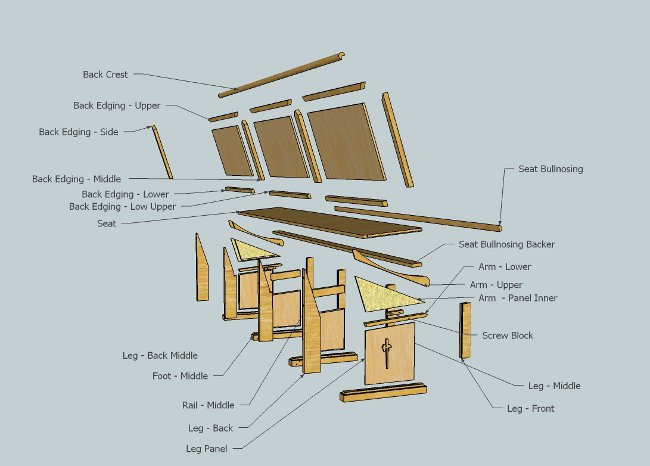
With these pews it was quickly apparent that the two biggest issues were the arms and the kneelers (due to the unique parallel arm action).
A simple fact that is known to woodworkers is that wood constantly expands and contracts as the humidity changes. The expansion is not equal in all directions though. It is primarily across the grain and almost non-existent along the length.
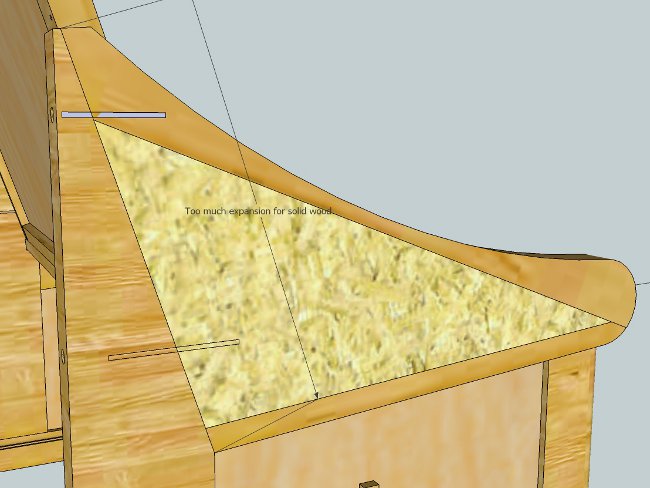
Using a stable panel in the center with solid wood edging all the way around is the ideal solution here. This gives the durability of solid wood to all the corners but stability similar to that of plywood. Those long, narrow rectangles laying across the joint represent screws and let me know what length of screw works best.
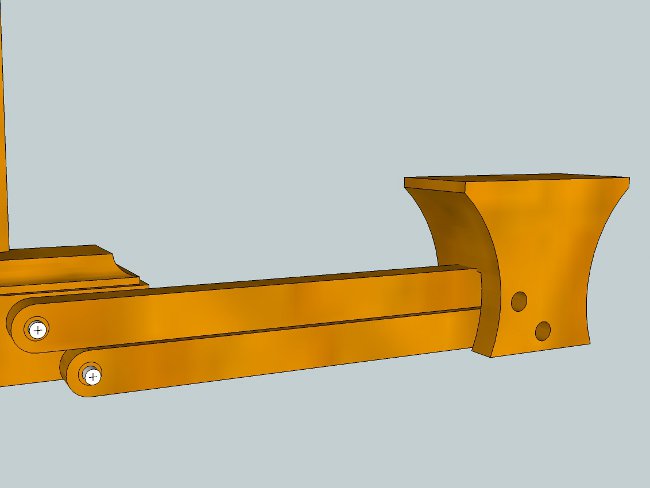
The kneelers were the most time-consuming aspect of the entire design. Prior to building anything, the entire action was modeled in a computer drawing and the motion tested to ensure proper function. Finally, a full-sized mockup was built.
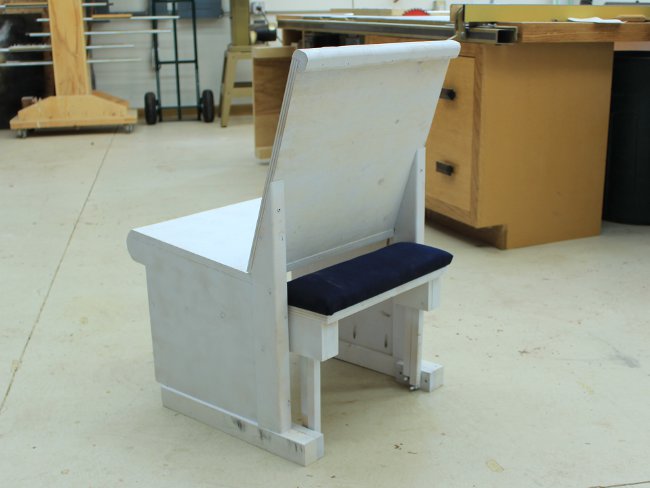
Testing with the mockup made it possible to pick a perfect back height. It also showed us that the kneelers needed to have more than 90 degrees of motion. A slight alteration of the pin placement opened the range of motion to around 110 degrees.
There were many other details that needed resolving during this portion of the design phase but they were much simpler and were easily figured out. So it was onto construction.
This is by no means a complete documentation of building the pews. It is sufficient however, to give the reader an accurate idea of what processes are utilized in the construction of custom furniture.
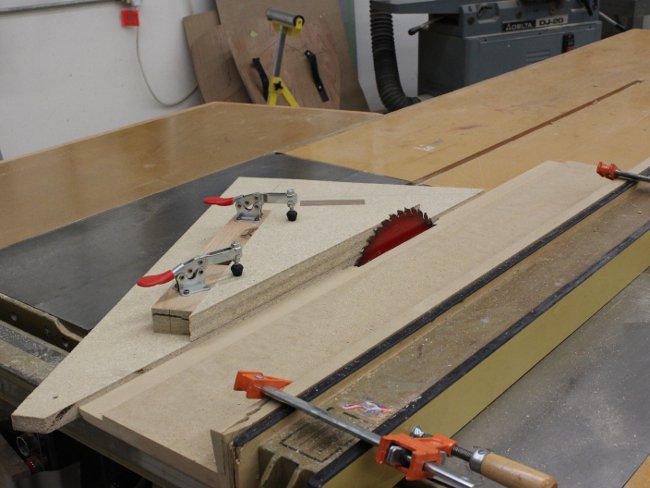
Two pews required 4 panels to form the core of the arms. To ensure proper fit, a jig is used to trim them to exact dimensions. Note that the above operation requires specific steps to do safely. I won’t get into the details on that now as it is outside of the scope of this article.
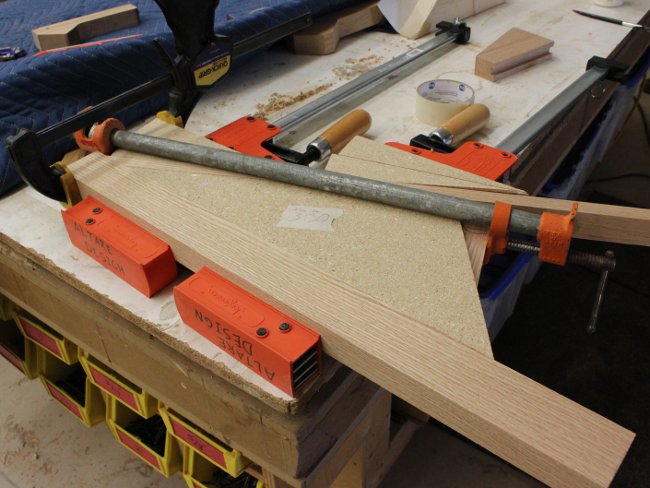
After cutting the wedge-shaped panels, solid oak boards are glued onto the two long edges. Notice the wedges being used in conjunction with the clamps? They are faced with sandpaper to prevent slipping. Without them, it would be impossible to clamp angled surfaces like this.
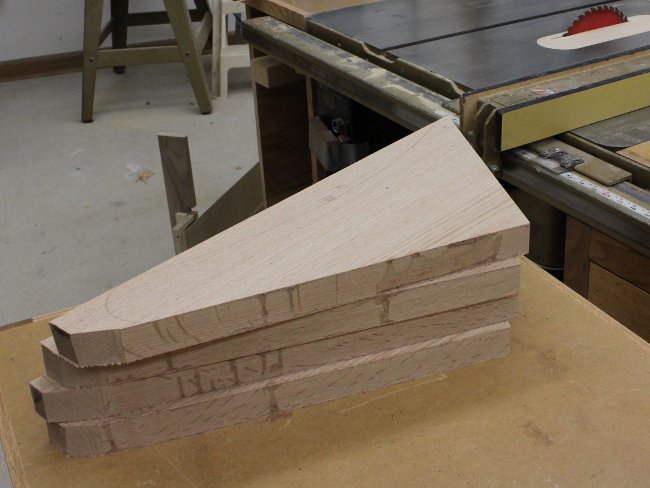
After the edging was flushed to the surface, oak veneer was pressed onto both faces. Pencil lines can be seen on the surface here. This is the final shape that will be cut in the next step.
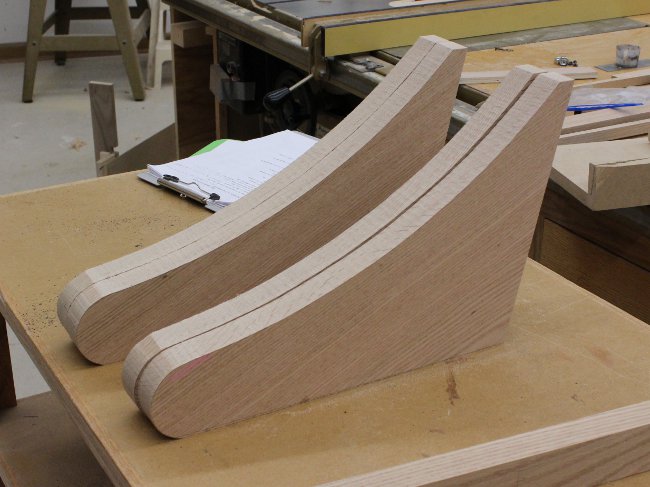
All the arms were cut close to the pencil line on the bandsaw. They will later be trimmed to exact dimensions using a template and a special template cutting bit on a router table.
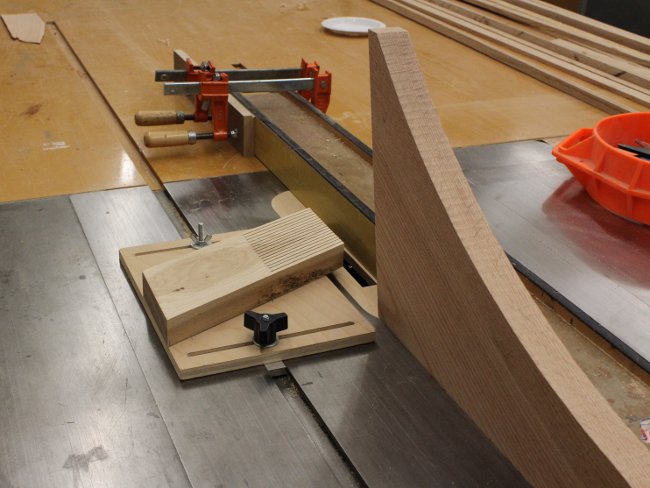
The arms need to have grooves on the bottoms to accept panels. This setup is for left hand arms. The right arms are done in a similar manner but require a few alterations to the process.
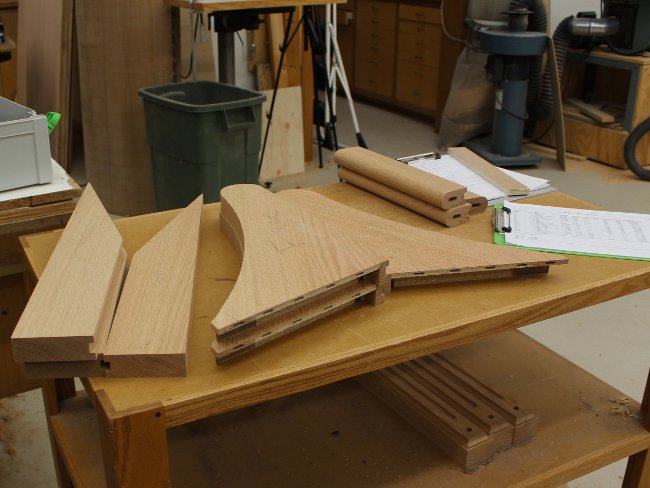
All the joinery is cut on the arms, feet and legs. There’s a combination of floating tenon, dowel and tongue and groove joinery being used here.
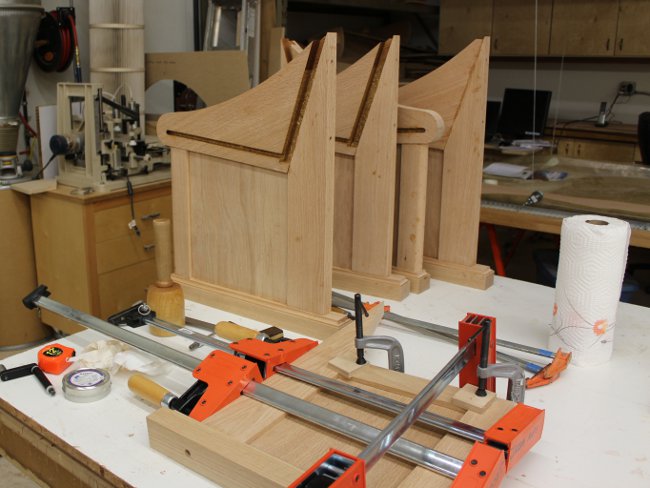
Each assembly is complex enough to require over 15 minutes of time to spread glue and put together. Epoxy with a long open time was the glue of choice for that reason.
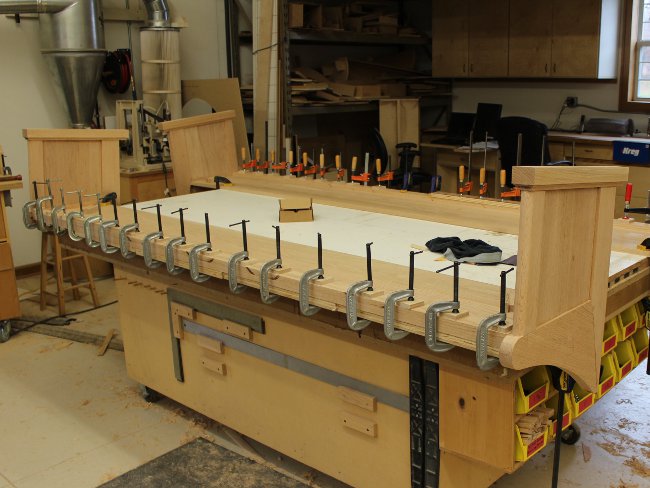
The seats are 3/4″ thick solid oak. That is plenty strong for the application considering it is supported underneath and attached to a tall back for added stiffness. For appearance sake though, it needed to have a thicker front edge so an additional strip of oak was glued in place. Round bullnosing will then be glued to the front of that.
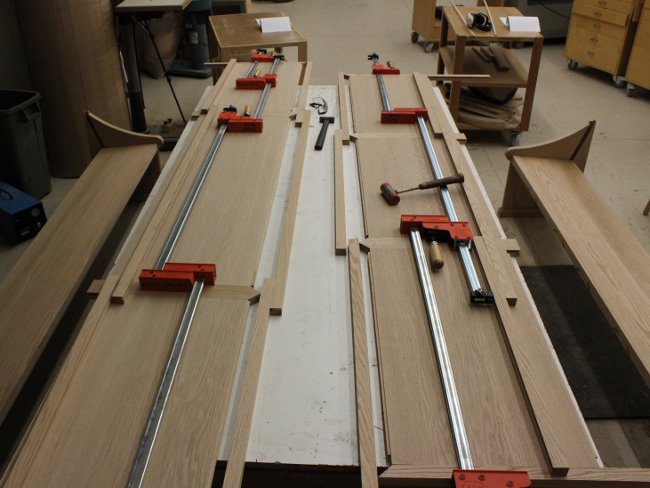
The backs were made from a combination of plywood and solid oak to achieve a combination of strength, stability and durability.
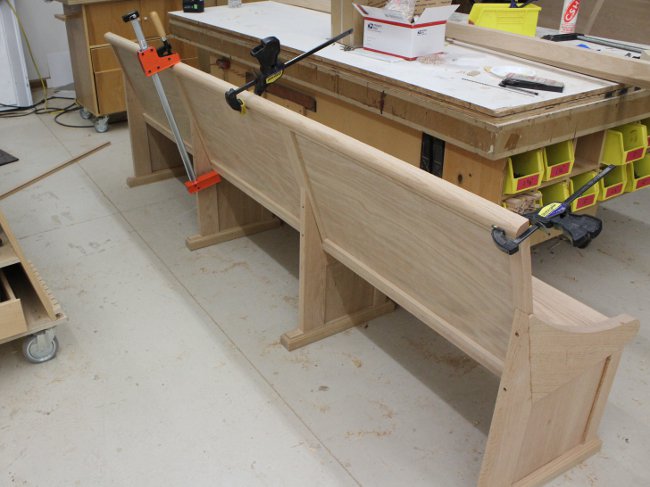
Here the legs are in place and the last piece of wood is attached in the form of round trim on the top of the pew’s back. There’s some cleanup, fitting and finishing work that needs to happen still but otherwise, this pew is complete.